
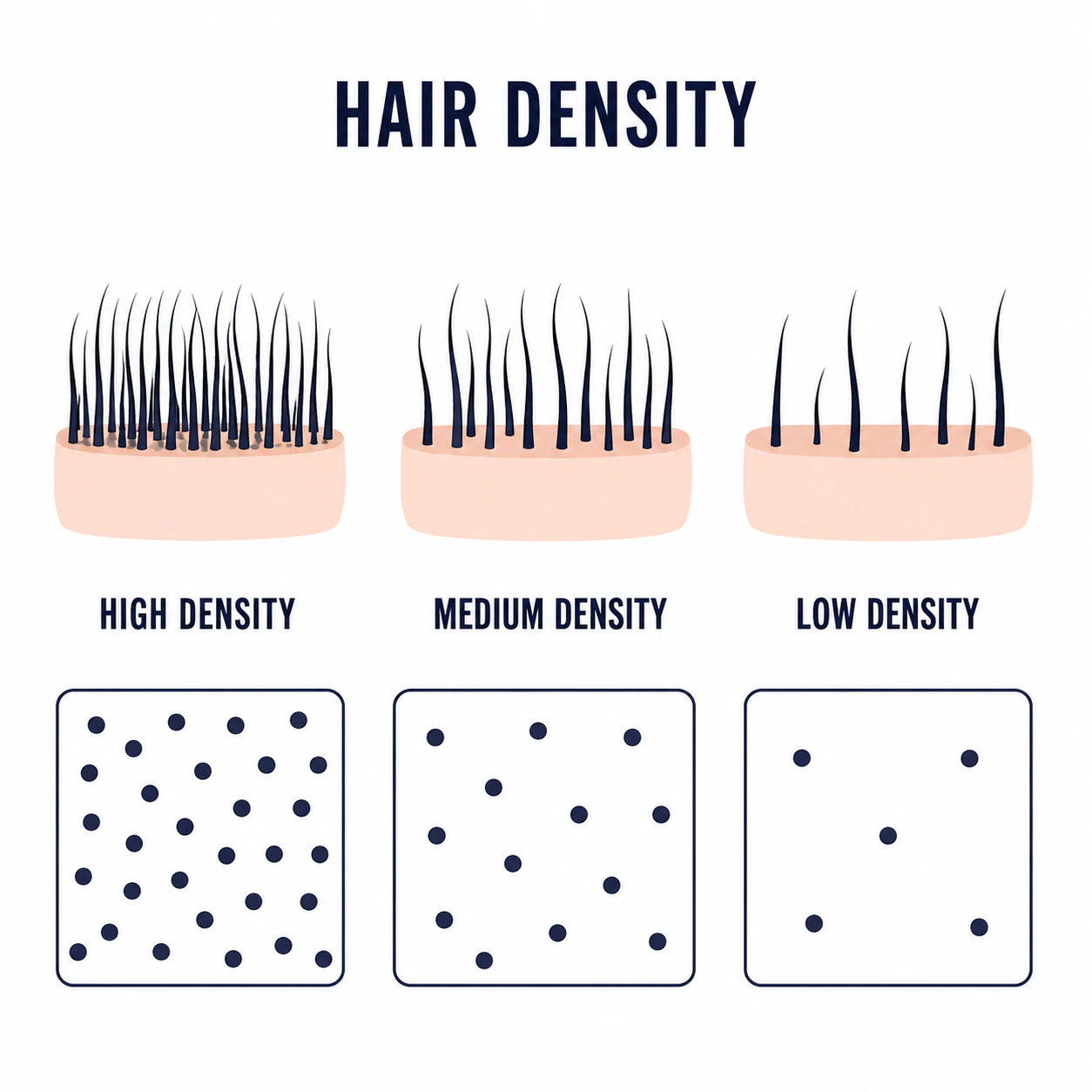
Hair density refers to how many follicular units (hair grafts) you have in a specific area of the scalp. It plays an important role in how full your hair looks and in planning a hair transplant.
- High density = fuller, thicker-looking hair
- Low density = thinner, more sparse appearance
What Is the Average Hair Density?
Hair density is measured in follicular units per square centimeter (FU/cm²), not by the number of individual hairs.
Most people have between 80 and 120 follicular units per cm², but several factors can affect this number, including ethnicity, age, and genetics.
What Is a Follicular Unit?
A follicular unit, also known as a hair graft, is a natural grouping of 1 to 4 hairs. But it’s more than just hair—it’s a mini-organ made up of:
- Sebaceous glands (keep the scalp lubricated)
- Arrector pili muscle (the tiny muscle that makes your hair “stand up”)
- Nerves and blood vessels (provide sensation and deliver oxygen and nutrients to the hair follicle)
- A protective collagen sheath (a thin layer of supportive tissue that surrounds the hair follicle, helping protect it and hold it securely in place)
Types of Follicular Units
Different types of grafts are used for different areas of the scalp. The percentages below show approximately how often each type of follicular unit is naturally found in the average scalp:
- 1-hair units (~20%) – Contain a single hair and are ideal for creating a soft, natural-looking hairline.
- 2-hair units (~50%) – Usually the most common type and provide natural, even coverage throughout the scalp.
- 3–4-hair units (~30% combined) – Contain the most hairs per graft and are especially valuable for building volume and density in larger areas.
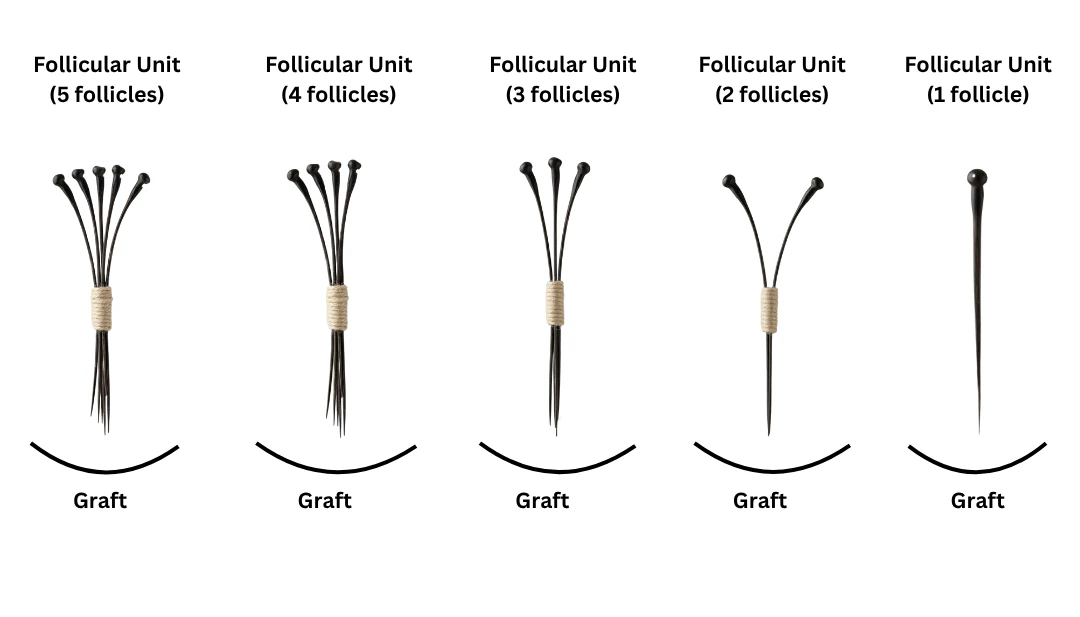
On average, follicular units contain about 2 hairs, although this varies with genetics, ancestry, scalp region, age, and hair loss.
Some people naturally have more than four hairs growing together in a single follicular unit, while others have a higher percentage of smaller 1- and 2-hair follicular units. This natural mix is different for everyone and can affect how much coverage and fullness can be created with the available grafts. Using each type strategically helps recreate the way your hair naturally grows.
How Many Hairs Are on the Scalp?
The average scalp has about 100,000 hairs, growing in approximately 50,000 natural follicular units. Remember, each follicular unit contains 1–4 hairs, averaging about 2 hairs.
Of those 50,000 follicular units:
- ~37,500 (75%) are in areas that may be affected by pattern hair loss.
- ~12,500 (25%) are in the more permanent donor area along the back and sides of the scalp.
Only a portion of the donor hair can be safely moved during hair transplant surgery because enough must be left behind to keep the donor area looking full.
How Ancestry Can Affect Hair Density and Thickness
Hair characteristics vary from person to person, but ancestry can influence average hair density, thickness, curl, and growth pattern. These differences can affect how full hair looks and matter when planning a hair transplant.
Density Varies by Scalp Region
Hair density also isn’t the same across your entire scalp. Some areas naturally grow more densely packed hair than others:
- Hairline/Frontal Scalp: Tends to be more delicate and less dense.
- Temporal areas (sides of the head): Usually the lowest density.
- Crown (back top of the head): Often thicker than the front.
- Occipital area (back of the head): Highest density. This is typically where we harvest donor hair for transplants.
How Spacing Affects Natural Density
The spacing between follicular units naturally varies with hair density. In the donor area, studies have measured average spacing of approximately 1.0–1.4 mm, with follicular units closer together in higher-density hair and farther apart in lower-density hair.
These patterns vary between patients and can also change with age and progressing hair loss, which is why we evaluate your individual follicular-unit density rather than relying on one standard measurement.
In men, pattern hair loss commonly causes progressive miniaturization and loss of hair in more defined areas, such as the hairline, frontal scalp, midscalp, and crown. As fewer and finer hairs remain, these areas appear less dense and more scalp becomes visible.
In women, thinning is often more diffuse and spread across a larger area of the scalp. The individual hairs become finer and overall density decreases, allowing more of the scalp to show through.
What Matters Most for Your Hair Transplant
Ancestry provides only a general reference. Your actual hair density, number of hairs per follicular unit, thickness, characteristics (straight vs. curly), and color contrast between your hair and scalp matter more when determining how much coverage and fullness you can achieve.