
The Recipient Area
The recipient area is the part of the scalp where hair has been lost and where the transplanted grafts will be placed. This may include the hairline, frontal scalp, midscalp, crown, or a combination of these areas.
The size of the recipient area can vary significantly from one patient to another. A small area may require relatively few grafts, while advanced hair loss can involve a much larger portion of the scalp.
The scalp is larger than most people realize, covering about 700 cm² (109 in²) on average—roughly the surface area of a large dinner plate. In patients with advanced pattern hair loss, a significant portion of this area may eventually need coverage.
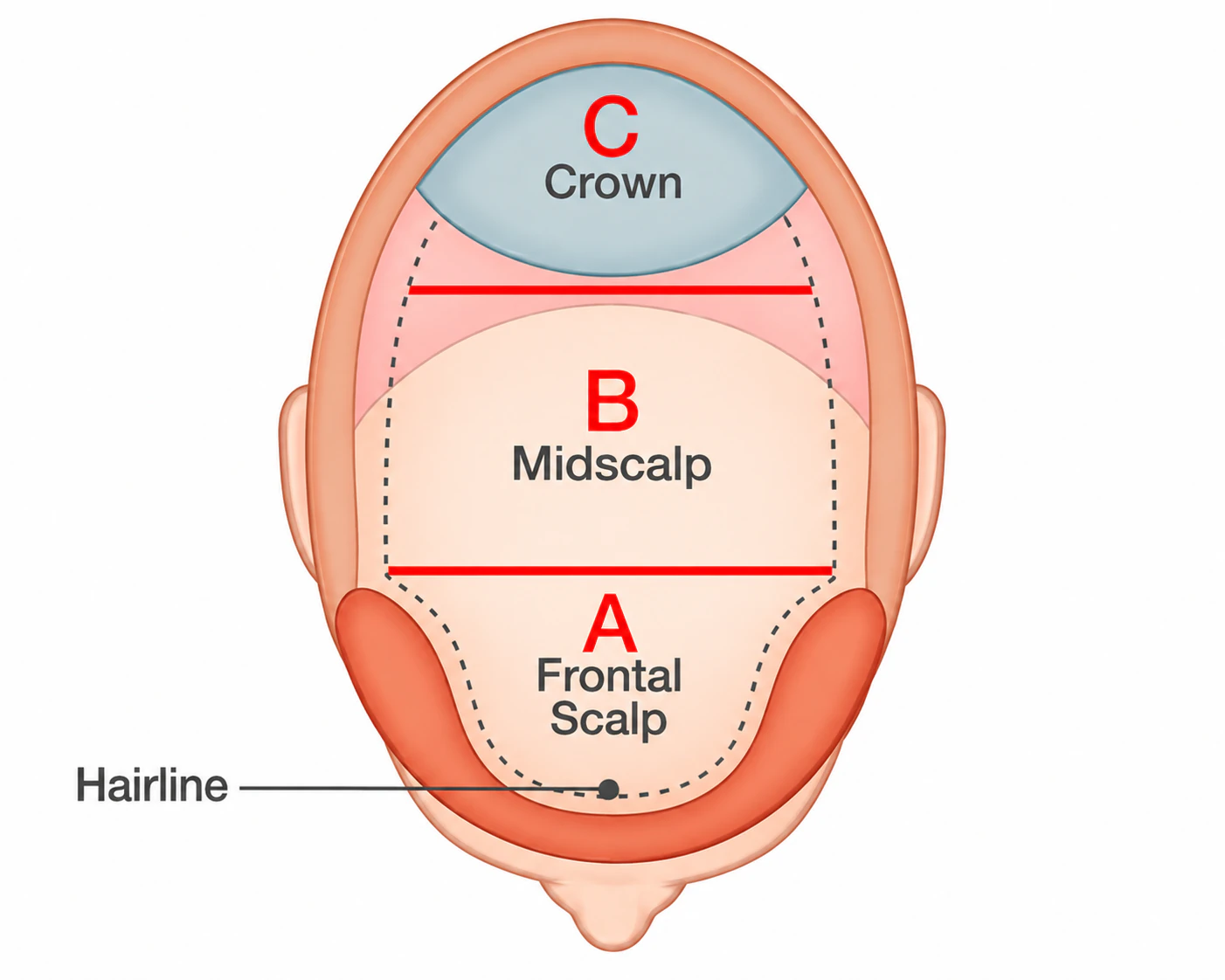
Understanding Your Recipient Area
The larger the recipient area, the more grafts are needed to create coverage. However, because donor hair is limited, we cannot always restore every thinning or bald area to the density you once had.
Think of it as spreading a limited number of hairs over a larger area. The more area we need to cover, the farther those hairs must be spread—and the more difficult it becomes to create the appearance of fullness throughout the entire scalp.
This is why some areas may be given priority. The hairline and frontal scalp often provide the greatest visual improvement, while the midscalp and crown may require grafts to be distributed more conservatively depending on the amount of donor hair available and the expected pattern of future hair loss.
The Donor Area
Hair used for a transplant comes from the donor area—the more permanent hair along the back and sides of the scalp. This hair is generally more resistant to pattern hair loss.
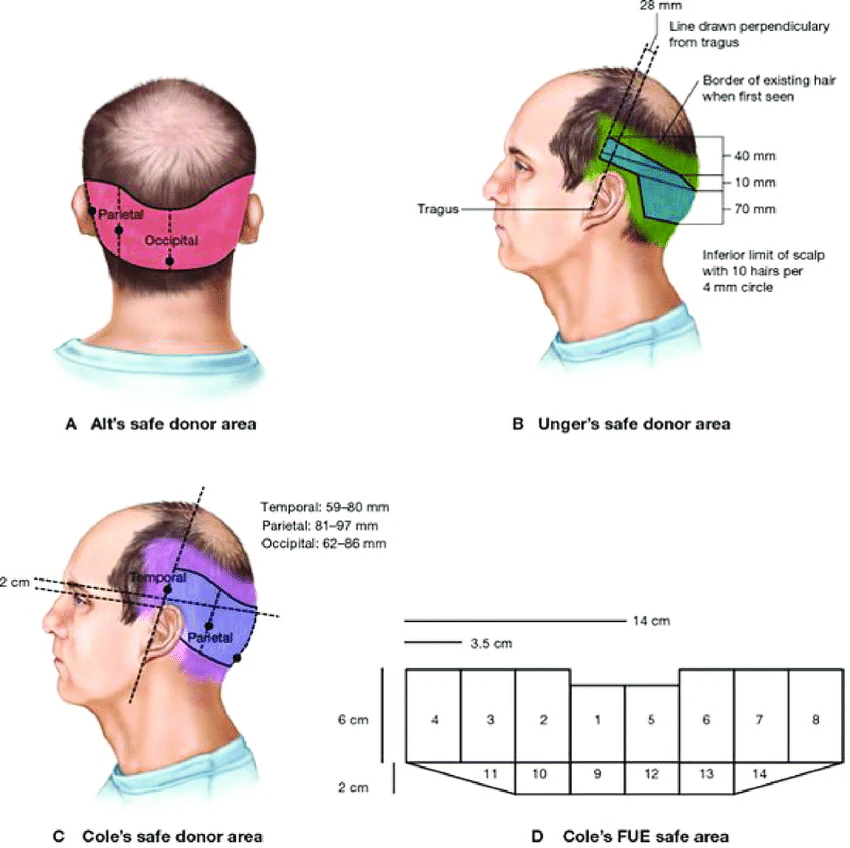
But donor hair is a limited supply. We cannot remove all of it without making the back and sides look thin and patchy. As a general estimate, only about half of the hair in the safe donor area may be available for transplantation over a lifetime, not safely at once.
For the average patient, that works out to approximately:
~6,000–6,250 follicular units or ~12,000–12,500 individual hairs
The actual amount can be higher or lower for each patient, which is why careful long-term planning matters.
What This Means for You
If you have very extensive hair loss, there simply isn’t enough donor hair to replace every hair you’ve lost. The donor supply is much smaller than the area we may need to cover.
In someone with advanced hair loss, we may have only about 6,000 grafts—or roughly 12,000 hairs—to work with, compared with approximately 100,000 hairs on the original scalp.
Fortunately, a successful hair transplant isn’t about replacing every lost hair. It’s about placing a limited number of hairs where they will make the biggest visual difference.
By carefully and strategically placing and distributing grafts, an experienced surgeon can create the appearance of much greater fullness without replacing the original density (fullness).
That’s why understanding your personal donor supply, degree of hair loss, and goals is so important. No two patients have the same amount or quality of donor hair, degree of hair loss, or restoration needs, which is why every hair transplant must be planned individually rather than using a one-size-fits-all approach.