
Eyebrow transplant surgery can restore or reshape areas where eyebrow hair is permanently missing. Hair follicles are taken from the back of the scalp and carefully placed into the eyebrow, one graft at a time.
Because eyebrow hairs lie close to the skin and change angle and direction across a very small area, eyebrow transplantation requires especially careful design, donor hair selection, recipient site creation, and graft placement.
Why Eyebrows Matter
Eyebrows help frame the eyes, balance the face, communicate emotion, and help redirect sweat and moisture away from the eyes.
Eyebrows and Facial Recognition
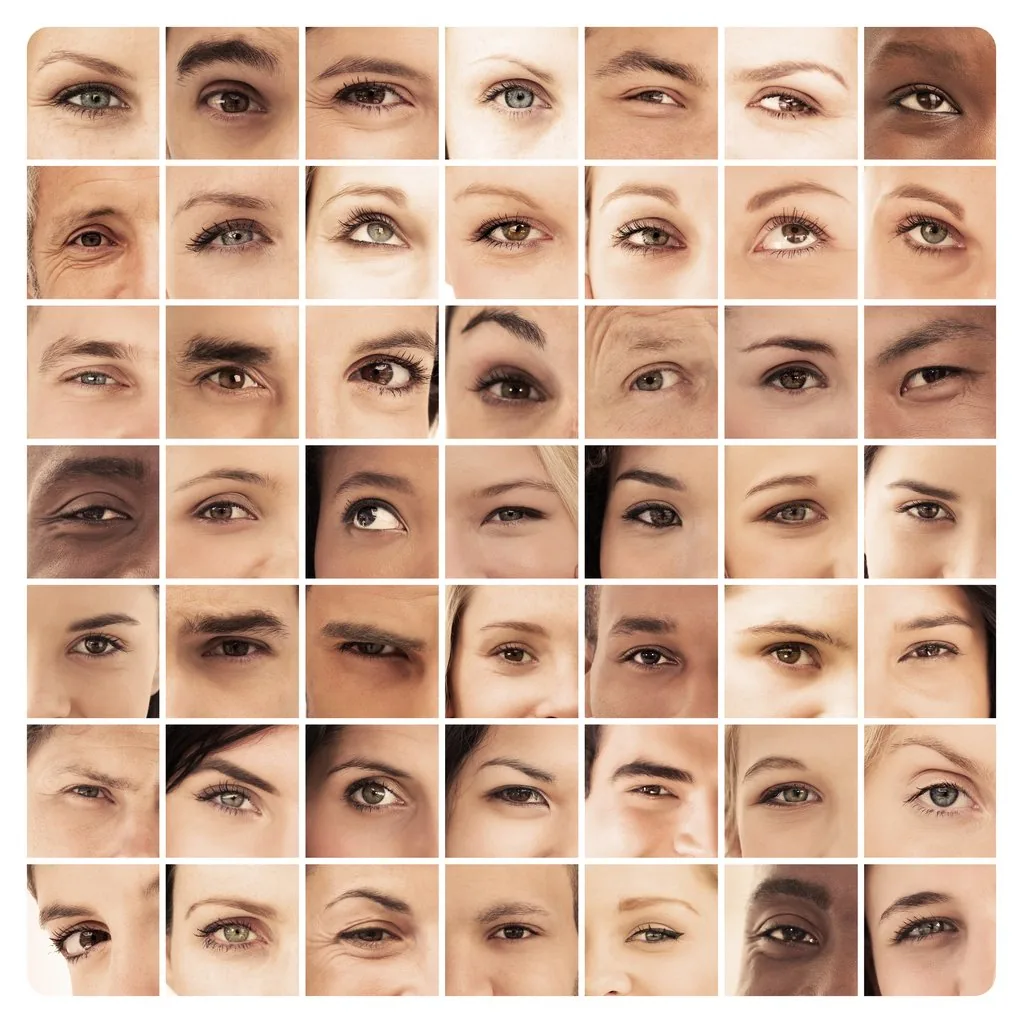
Eyebrows also play an important role in recognizing faces. In a well-known MIT study, people had more difficulty recognizing familiar faces when the eyebrows were digitally removed than when the eyes were removed. This shows how strongly eyebrow shape and position contribute to facial identity.1
What Your Eyebrow Shape Says About You
Eyebrow shape can influence how a face and facial expression are perceived. In traditional face-reading interpretations, curved brows have been associated with a softer or more relational appearance, straighter brows with a more structured appearance, and angled brows with a stronger or more assertive appearance.
A Brief History of Eyebrow Styles
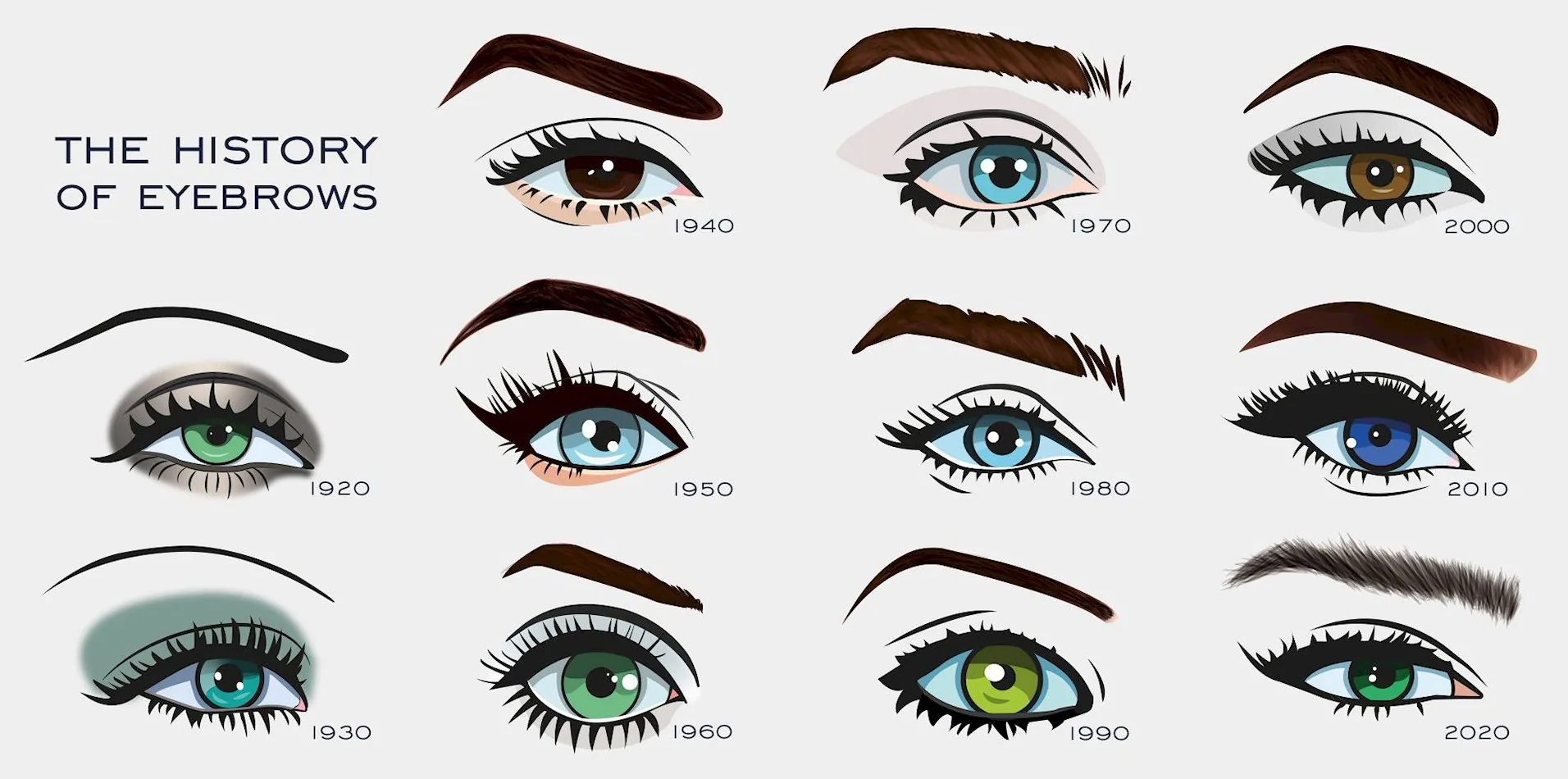
Eyebrow trends have changed dramatically across cultures and generations, often reflecting the beauty standards of the time.
- Ancient Egypt: Dark, defined brows and eye makeup were an important part of beauty and status
- Greek and Roman eras: More natural brows and facial balance were commonly favored
- Middle Ages in Europe: High foreheads became fashionable, and brows were sometimes thinned or removed
- 1920s: Very thin, highly arched brows became popular
- 1940s: Fuller, more natural brows returned
- 1960s and 1970s: Brow styles ranged from thin and refined to more natural shapes
- 1980s: Fuller, bolder brows became fashionable
- 1990s: Very thin, heavily plucked brows returned
- 2000s to today: Trends have moved between highly defined brows and fuller, softer, more natural-looking shapes
Understanding Eyebrow Hair
A natural eyebrow is usually described in three sections: the head near the nose, the central body, and the outer tail. Hair angle, direction, density, and thickness change across these areas, which is why a successful transplant cannot use one identical pattern from one end of the brow to the other.
Eyebrow Growth Cycle
Eyebrow hair has a much shorter growth phase than scalp hair. The eyebrow growth phase typically lasts about 2–3 months, compared with several years for scalp hair. This shorter growth cycle is one reason natural eyebrow hairs stay relatively short.
Scalp hairs transplanted into the eyebrow generally keep important characteristics of the donor hair, including their tendency to grow longer. For that reason, transplanted eyebrows usually require regular trimming and grooming.
Eyebrows and Aging
Eyebrow thinning and graying can occur with normal aging, although the pattern is not the same for everyone. Some people develop thinner brows with age, while others may develop coarser or more prominent eyebrow hairs.
Why Eyebrows Thin or Fall Out
Eyebrow hair loss, also called madarosis, has many possible causes. Identifying the cause is important before deciding whether medication, treatment of an underlying condition, or surgery is appropriate.
Common causes include:
- Genetics and naturally sparse eyebrows
- Normal aging
- Repeated over-plucking, waxing, laser removal, or other cosmetic trauma
- Scarring from burns, injury, surgery, or radiation
- Active thyroid disease, particularly hypothyroidism (low thyroid)
- Autoimmune hair loss, including alopecia areata and frontal fibrosing alopecia
- Inflammatory skin conditions such as eczema, seborrheic dermatitis, contact dermatitis, or psoriasis
- Certain infections
- Certain medications that can cause hair thinning or shedding
- Significant nutritional deficiencies or illness
- Cancer treatment, especially chemotherapy
- Trichotillomania or repeated hair pulling
The Emotional Impact of Eyebrow Loss
Because eyebrows help define your face, express emotion, and play an important role in how you recognize yourself in the mirror, losing them can significantly affect your confidence and how you feel about your appearance.
Can Thinning Eyebrows Be Treated Without Surgery?
Yes. If eyebrow follicles are still present but thin, medical treatment may sometimes improve the hair that remains. Surgery is generally more useful for areas where follicles are permanently absent, such as scars, completely missing portions of the brow, or areas that did not regrow after the underlying cause was addressed.
Bimatoprost
Bimatoprost (Latisse®) is FDA-approved for thin or sparse eyelashes and is used off-label for eyebrow thinning. Clinical trials have shown that topical Bimatoprost can increase eyebrow density and hair thickness in patients with eyebrow thinning.2
Topical Minoxidil
Topical minoxidil is also used off-label for eyebrow thinning. In a randomized placebo-controlled study, 2% topical minoxidil improved eyebrow hair count, diameter, and patient satisfaction after 16 weeks.
A later randomized trial found that 2% minoxidil and 0.01% or 0.03% Bimatoprost all improved eyebrow thinning, with 0.03% Bimatoprost generally producing the best overall results.2,3
Oral Minoxidil and Frontal Fibrosing Alopecia
In a small 2026 study of women with frontal fibrosing alopecia (FFA), low-dose oral minoxidil improved eyebrow coverage in 4 of 8 evaluable patients (50%) after 6 months. All responders had mild-to-moderate eyebrow loss. Oral minoxidil should be considered an additional treatment to improve remaining hair—not a replacement for treating the underlying inflammation that causes FFA.4
What Eyebrow Transplant Surgery Can and Cannot Do
Eyebrow transplant surgery moves healthy hair follicles into areas where eyebrow hair is permanently missing. It can fill gaps, restore part or all of a brow, cover selected scars, or change the shape and density of the eyebrow.
A transplant does not treat the medical condition that caused the eyebrow loss. If the underlying disease is still active, it may affect the existing eyebrow hairs, the transplanted hairs, or both. This is why diagnosis comes before surgery.5,6
Who May Be a Good Candidate?
Eyebrow transplantation may be considered when the eyebrow loss is permanent or stable, and the patient has enough healthy donor hair and suitable skin in the area being restored.
Examples include:
- Naturally sparse or incomplete eyebrows
- A desire to reshape or increase the density of the brows
- Permanent loss from over-plucking or previous cosmetic hair removal
- Selected scars from burns, trauma, or surgery
- Previous microblading or cosmetic tattooing when the skin is healthy, and the design can be incorporated into the surgical plan
- Selected medically caused eyebrow loss after the underlying condition has been appropriately evaluated and stabilized
When Eyebrow Transplantation May Not Be Appropriate
Surgery may need to be delayed or avoided when the cause of eyebrow loss is active, the eyebrow skin is unhealthy, or the expected result cannot be achieved safely.
Examples include:
- Thinning eyebrows without actual loss
- Active alopecia areata
- Active frontal fibrosing alopecia or another active scarring alopecia
- Active eczema, psoriasis, dermatitis, folliculitis, infection, or significant inflammation in the brow area
- Uncontrolled thyroid disease or another untreated medical cause of eyebrow loss
- Significant nutritional deficiencies that may be contributing to eyebrow thinning or hair loss
- Currently undergoing chemotherapy or recent chemotherapy when eyebrow regrowth is still possible
- Active trichotillomania or continued eyebrow pulling
- Inadequate donor hair
- Scars with limited blood supply
- A strong tendency toward abnormal or keloid scarring
- Poorly controlled medical conditions that may interfere with healing
- Expectations that cannot realistically be achieved with the procedure
A 2018 systematic review of 67 publications involving 354 patients emphasized that the cause of eyebrow or eyelash loss is an important part of deciding whether transplantation is appropriate.6
Planning Your Eyebrow Transplant
Eyebrow design is highly individualized. The goal is not simply to copy a standard eyebrow shape. We consider your existing brows, facial proportions, eye shape, brow bone, forehead, hair characteristics, natural growth pattern, and the appearance you want to create.
The design is drawn and reviewed before surgery because even small changes in height, arch, width, or tail position can noticeably change facial expression.
Eyebrow Shape and Facial Features
Face shape can be used as one guide when designing a brow, but it is not a fixed formula. The final design should fit the individual patient rather than forcing every face into a standard pattern.
| Facial Feature | Possible Brow Design Consideration |
|---|---|
| Long face | A flatter or more horizontal brow may help reduce the appearance of facial length |
| Oval face | A soft, gently angled brow often complements the natural balance of the face |
| Round face | A more defined arch may create the appearance of greater facial length |
| Square or angular face | A softer curve may help balance stronger facial angles |
| Heart-shaped face | A softer arch may help balance a wider upper face and narrower chin |
| Prominent forehead or brow bone | A straighter or lower-arched design may help balance facial proportions |
Natural Eyebrow Growth Patterns
Eyebrow hairs do not all grow in the same direction.
- Head: Hairs commonly fan upward and slightly outward
- Body: Hairs gradually become more horizontal and begin to overlap
- Tail: Hairs become flatter and follow the taper of the outer brow
The exact pattern varies from person to person. During surgery, each recipient site must follow the planned angle and direction for that specific part of the brow. Eyebrow hairs also need to sit very close to the skin. Hairs placed too upright or in the wrong direction can be noticeable even when they grow well.7,8
Choosing the Right Donor Hair
Choosing the right donor hair is especially important in eyebrow surgery. Scalp hair is commonly used, but the surgeon should consider hair thickness, curl, color, growth pattern, and the percentage of single-hair follicular units.
Donor hair that is too thick or has too much curl can be more difficult to blend naturally with eyebrow hair. Curly hairs may curve away from the skin or grow in a direction that does not follow the natural shape of the eyebrow. Selecting hairs with the right natural curve—and placing them in the proper direction—helps the transplanted hairs lie flatter and blend more naturally with the brow.
How Many Grafts Are Needed?
The number of grafts depends on how much eyebrow hair is missing, the size and shape of the area, how much existing hair remains, the desired density, and the characteristics of the donor hair.
Some cases may require hundreds of grafts per eyebrow for substantial reconstruction, where partial restorations may need fewer, and selected cases may need more.
These numbers are general examples, not a formula for determining how many grafts you personally need.
FUT and SmartGraft™ FUE
Donor hair can be obtained using FUT or FUE. Both techniques can provide healthy follicular-unit grafts for eyebrow transplantation.
FUT removes a narrow strip of hair-bearing scalp that is divided under magnification into individual grafts. The donor area is then closed with stitches, which are typically removed about 10–14 days after surgery. FUT leaves a linear donor scar.
SmartGraft™ FUE removes follicular units individually with small circular punches. There is no linear incision or stitches to remove, but FUE still leaves multiple small, round extraction scars.
The better option depends on the donor area, number of grafts needed, hair characteristics, hairstyle preferences, previous surgery or scarring, and the surgical plan.
Preparing the Hair Grafts
After the grafts are removed, they are inspected and carefully prepared for implantation. Eyebrow transplantation relies heavily on single-hair grafts because they allow more precise control of softness, direction, and spacing. Grafts must also be kept hydrated and protected while they are outside the body.
Creating the Recipient Sites
Tiny openings called recipient sites are created in the eyebrow area using small surgical blades or needles. These openings determine where each graft will sit and help establish its angle, direction, spacing, and depth.
This is one of the most important steps in eyebrow transplantation because a technically healthy graft can still look unnatural if it grows at the wrong angle or in the wrong direction.
Hair Graft Placement
Once the recipient sites are created, each hair graft is carefully inserted into its planned location. Eyebrow grafts are small and fragile, so they must be handled gently and positioned without damaging the follicle.
The graft also needs to sit at the correct depth. Placement that is too deep or too shallow can contribute to an uneven skin surface or an abnormal appearance.
Comfort During Surgery
Local anesthesia is used to numb the donor area and eyebrows, similar to the numbing medication used during dental procedures. Oral medication and nitrous oxide may also be offered to help you relax.
Once the areas are numb, patients can usually watch television, listen to music, rest, or sleep during portions of the procedure.
Procedure Time
Eyebrow transplantation commonly takes several hours. The exact time depends on the number of grafts, the donor harvesting method, whether one or both eyebrows are being restored, and the complexity of the design.
Although the treatment area is small, eyebrow surgery can be time-consuming because each hair must be placed with very careful attention to angle, direction, depth, spacing, and the changing growth pattern across the brow.
Recovery and Hair Growth Timeline
Recovery is generally manageable, but the eyebrows are highly visible, so patients often want to know what they will look like and when they can return to normal activities.
Days 1–3
Small scabs begin to form around the grafts. Mild redness, swelling, tenderness, or bruising around the brows and eyelids can occur.
Days 5–10
Most scabbing gradually loosens and clears as the skin heals.
About 1 Week
Many patients can resume light exercise if healing normally. Makeup should not be applied directly over healing grafts until the scabs have cleared and you have been told it is safe.
About 10–14 Days
More strenuous exercise and most normal activities can usually be resumed if healing is progressing well. FUT stitches, when used, are generally removed during this period.
Weeks 2–6
Many of the transplanted hair shafts shed. This is expected because the follicles remain beneath the skin.
Around 3–4 Months
Early new eyebrow growth usually begins.
Around 6 Months
Growth is becoming more noticeable, but the result is still developing.
Around 12–15 Months
Most patients are approaching the mature result, although individual hairs can continue to thicken and settle beyond a year.
These are general timelines. Healing and growth vary from person to person, so your postoperative instructions should take priority.
Pain and Downtime
Most patients describe postoperative discomfort as mild and manageable. Temporary tenderness, tightness, itching, redness, bruising, or swelling can occur in the brows or donor area.
Patients are up and walking around after surgery and can usually perform normal light daily activities. Some patients return to desk work within a few days, while others prefer to allow about a week for visible redness, swelling, and scabbing to improve.
Sun Exposure and Early Aftercare
During early healing, the grafts should be protected from rubbing, scratching, picking, trauma, and excessive sun exposure. Once sunscreen can be safely applied, protecting the transplanted skin from strong sun exposure is important while redness and healing continue.
Maintaining and Grooming Your Transplanted Eyebrows
Because transplanted eyebrow hairs usually come from the scalp, they retain many of their original characteristics. This means they may grow longer, have a different texture or curl, or not lie as flat as natural eyebrow hairs.
How often you need to trim depends on your donor hair and the look you prefer. Once the grafts have fully healed, there are several simple ways to help manage and guide the new hairs:
- Brushing: Use a small eyebrow brush to gently guide the hairs in the desired direction
- Trimming: Because scalp hair grows longer than natural eyebrow hair, regular trimming is usually needed
- Brow gel or styling products: These can help hold hairs flatter and in the desired direction throughout the day
- Conditioning: Keeping the hairs soft can make thicker or coarser hairs easier to manage
- Consistent grooming: Regular brushing and styling can make the transplanted hairs easier to manage as they mature
Over time, some transplanted hairs may become easier to style, but they do not permanently turn into natural eyebrow hairs. Their basic thickness, curl, and growth characteristics are largely influenced by the donor hair, while their direction and how flat they lie are strongly influenced by how the follicles were placed during surgery and your ability to train them to lie flat following surgery.
What Can Affect Growth and the Final Result?
Eyebrow transplant results depend on the patient, the condition of the eyebrow skin, the donor hair, the surgery itself, and postoperative care.
Important factors include:
- Recipient skin health and blood supply: Active inflammation, infection, significant scarring, or poorly healed tissue can make growth less predictable
- Skin conditions in the eyebrow area: Eczema, seborrheic dermatitis, psoriasis, folliculitis, and other active conditions should be treated before surgery
- Underlying hair loss disease: Alopecia areata, frontal fibrosing alopecia, thyroid disease, and other medical causes should be evaluated and stabilized when possible
- Nicotine and tobacco: Nicotine reduces blood flow and can interfere with wound healing
- Overall health: Poorly controlled diabetes, vascular disease, significant nutritional deficiencies, and inadequate protein intake can interfere with healing
- Donor hair: Hair thickness, curl, color, and growth pattern affect how well transplanted hair blends with the existing eyebrow
- Surgical technique: Design, recipient-site creation, graft handling, placement, and depth all affect the final appearance
- Postoperative care: Scratching, trauma, excessive sun exposure, improper washing, or not following postoperative instructions can interfere with early healing
No surgeon can guarantee that every transplanted graft will grow. Outcomes vary depending on the patient, indication, technique, and condition of the recipient skin.
Possible Complications
Eyebrow transplant surgery is generally considered safe in appropriately selected patients, but no surgical procedure is risk-free.
Possible complications include temporary swelling or bruising, folliculitis, infection, poor or uneven growth, asymmetry, visible donor scarring, pitting or an uneven skin surface, and hairs that grow in an undesirable direction or angle.
Are Eyebrow Transplant Results Permanent?
Transplanted hair follicles taken from an appropriate donor area are expected to continue producing hair long-term. However, the surrounding natural eyebrow hairs can still change with age or an underlying medical condition, and no procedure can guarantee growth of every graft.
Can I Have an Eyebrow Transplant Over Microblading or a Cosmetic Tattoo?
In many cases, yes. Existing microblading or tattoo pigment does not automatically prevent transplantation, but the skin must be healthy, and the existing shape and pigment should be considered when designing the new eyebrow.
Can I Pluck, Wax, or Thread the Transplanted Brows?
Once the eyebrows are fully healed, they can be shaped and groomed. However, repeated aggressive plucking, waxing, or threading can traumatize hair follicles over time, just as it can with natural eyebrows. Trimming is usually the safest way to manage excess length.
Can Eyebrow Transplants Be Placed Into Scars?
Sometimes. Eyebrow hair can be transplanted into selected mature scars from burns, trauma, or surgery. However, scar tissue may have a different blood supply and skin quality than normal skin, so growth can be less predictable. The scar should be carefully evaluated before surgery.
Will I Need More Than One Procedure?
Many patients achieve their goal with one procedure, while others may choose a second procedure to add density, improve symmetry, or refine the shape. A transplant cannot replace every individual eyebrow hair that has been lost. Grafts must be placed with enough space between them to protect the blood supply to the skin and give each graft the best environment to heal and grow. Placing too many grafts too close together can reduce graft survival and increase the risk of poor healing.
If another procedure is needed, it is usually best to allow the first transplant to fully grow and mature before deciding whether additional density or refinement would be beneficial.
Can Transplanted Eyebrow Hair Turn Gray?
Yes. Transplanted hair continues to age like the hair in the donor area, so it can gradually turn gray over time. Once healing is complete, the brows can generally be tinted or colored if desired.
Can a Poor Eyebrow Transplant Be Repaired?
In some cases, yes. Repair may involve removing or reducing poorly positioned hairs, correcting direction, adding grafts to improve density or shape, or redesigning part of the eyebrow.
Expected Cost
At our hair restoration surgical center, eyebrow hair transplant surgery is currently $7,000. Your surgical plan, expected graft requirements, donor-harvesting method, and postoperative instructions are reviewed before surgery.