
Do You Still Need Medication After a Hair Transplant?
One of the most common questions we hear is, “If I get a hair transplant, do I still need hair loss medication?”
For patients with genetic hair loss, the answer is often yes. A hair transplant moves hair into areas where it has been lost, but it does not stop unpredictable future hair loss.
The transplanted hairs are generally more resistant to pattern hair loss, while the non-transplanted hair around them may continue to thin over time.
This can sometimes make patients think their hair transplant has “failed.” In reality, the transplanted hairs may still be growing, but the original, non-transplanted hairs around them have continued to disappear. As more of these hairs are lost, the overall fullness decreases, more scalp becomes visible, and isolated or patchy areas of transplanted hair may eventually remain.
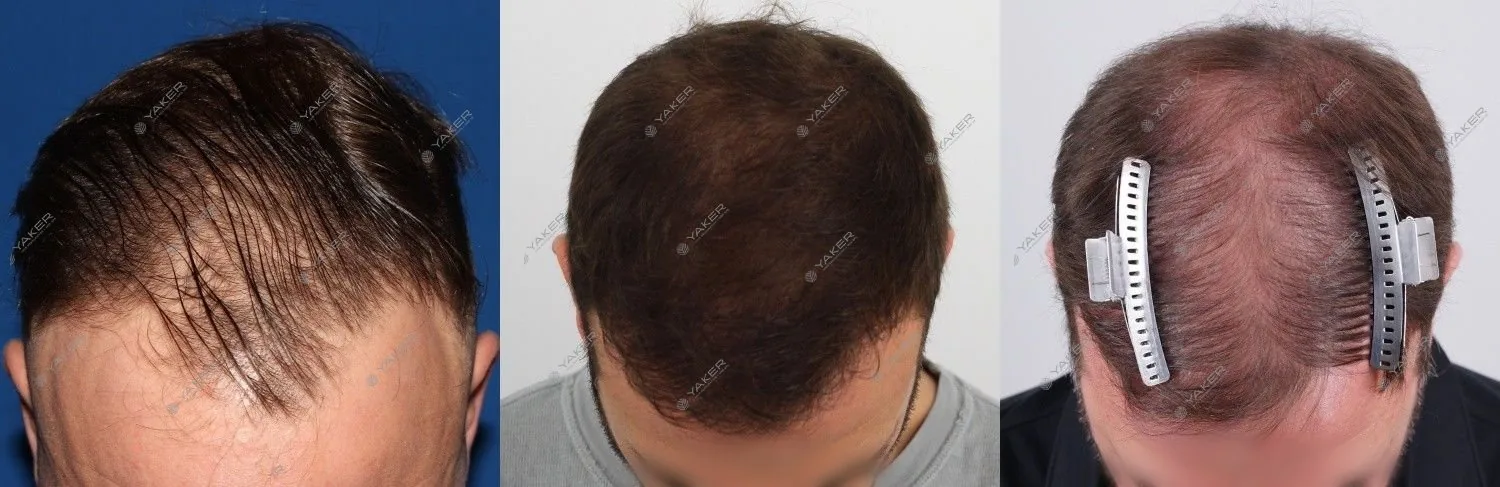
This is one reason long-term treatment can be so important. Medications such as finasteride, dutasteride, and/or minoxidil may help slow further hair loss and can also thicken miniaturized hairs, helping preserve the hair surrounding the transplant and maintain a fuller, more consistent appearance.
Because donor hair is limited and does not grow back where it was removed, preserving your existing hair whenever possible also helps preserve your donor supply for the future.
Does Everyone Need Medication?
No. Not every hair transplant patient has the same type of hair loss or needs the same treatment plan.
Someone undergoing hair transplantation to lower a naturally high hairline or fill in scars is very different from someone with actively progressing genetic pattern hair loss, where we do not yet know how much more hair may be lost or what the final pattern of hair loss will look like.