
What Is It?
Trichotillomania is a psychological condition classified as a compulsive behavior involving the repeated, uncontrolled urge to pull one’s own hair—usually from the scalp, eyebrows, beard, or eyelashes. Individuals may experience a sense of gratification or relief from engaging in this behavior.
It often starts in adolescence and can become a long-term coping mechanism for:
- Stress
- Anxiety
- Depression
- OCD-like behavior
What It Looks Like
On clinical examination, irregularly shaped areas of thinning or bald patches are seen, often with short, broken hairs of varying lengths due to pulling and breakage of the hairs over time.
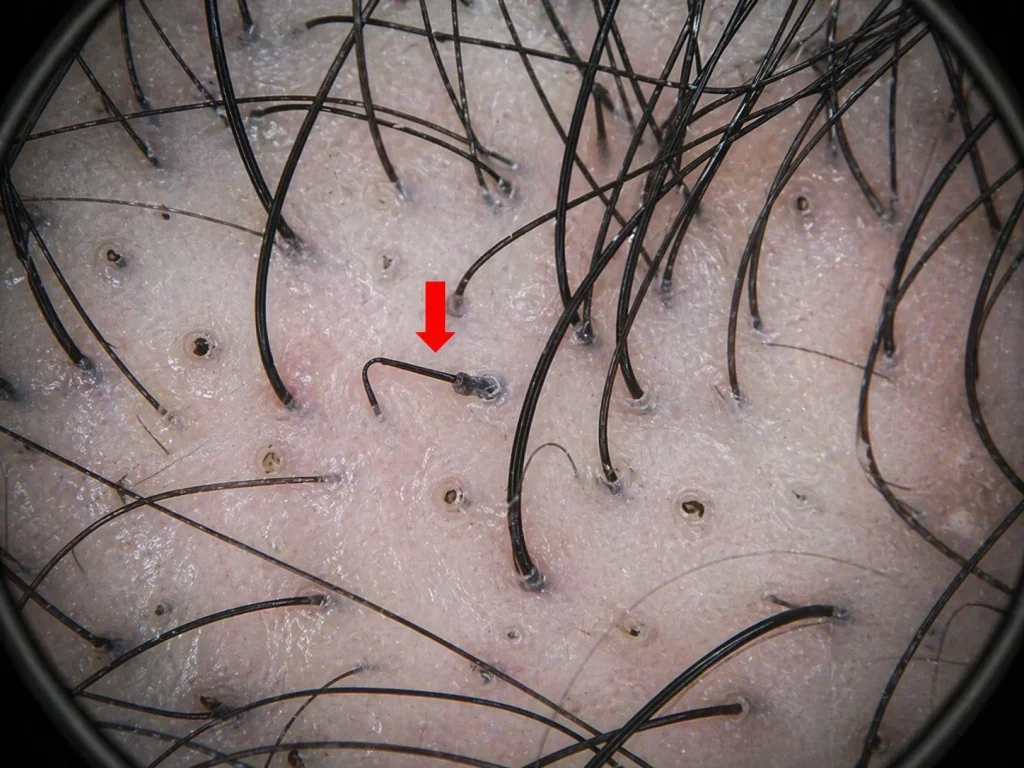
Trichoscopy shows broken hairs of varying lengths, split ends, and unique patterns like flame hairs, tulip hairs, and the V-sign, all of which point to physical trauma rather than a biologic miniaturization process (as in androgenetic alopecia).
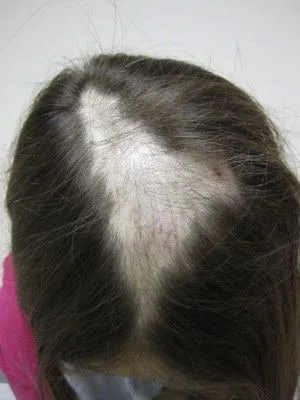
This image shows trichotillomania, characterized by irregular patchy hair loss with broken hairs of varying lengths and mild scalp redness from repeated hair pulling.
Diagnosis & Treatment
Diagnosis is clinical, based on history and scalp exam. A scalp biopsy is rarely needed unless another condition is suspected.
Best Treatment Approaches
Since Trichotillomania is often chronic, with periods of remission and relapse, the best treatments focus on addressing the underlying behavioral and emotional triggers while providing supportive interventions.
- Cognitive Behavioral Therapy (CBT) with Habit Reversal Training (HRT)
- SSRIs (e.g., fluoxetine) for anxiety or depression
- Support groups or counseling
- Behavioral tools (wearing gloves, fidget tools, mindfulness)
Without treatment, the disorder can persist for years, causing significant emotional and physical distress, including feelings of shame and isolation. The pulling behavior is typically performed during times of stress, boredom, or relaxation, and it can sometimes become an automatic habit.
Hair can regrow once pulling stops, but prolonged behaviors can lead to permanent hair loss due to irreversible damage to the hair follicles.
Can You Have a Hair Transplant With Trichotillomania?
Hair transplant surgery is not recommended when trichotillomania is active because continued hair pulling can damage or remove newly transplanted follicles and compromise the final result. Surgery also does not treat the underlying urge to pull, so performing a transplant before the condition is well controlled carries a significant risk of losing the transplanted hair.
Hair transplant surgery may be considered once trichotillomania has been successfully treated and hair pulling has remained inactive for at least 12 months, although a longer period of stability may be recommended for some patients. The donor and recipient areas must also have adequate, healthy hair for transplantation. Ultimately, candidacy is determined through a careful evaluation of the hair, scalp, and history of trichotillomania.