
Split ends are one of the most common signs of hair shaft damage. They occur when the protective outer layer of the hair becomes worn down, causing the end of the strand to separate into two or more smaller fibers. While split ends may seem like a minor cosmetic issue, they are often a sign that the hair shaft has been exposed to ongoing stress and damage.
Think of a frayed rope. When the fibers at the end begin to unravel, the rope becomes weaker and more prone to further damage. Hair behaves much the same way. Once a strand begins to split, the damage can continue traveling upward along the hair shaft, increasing the risk of breakage, frizz, tangling, and thinning-looking ends.
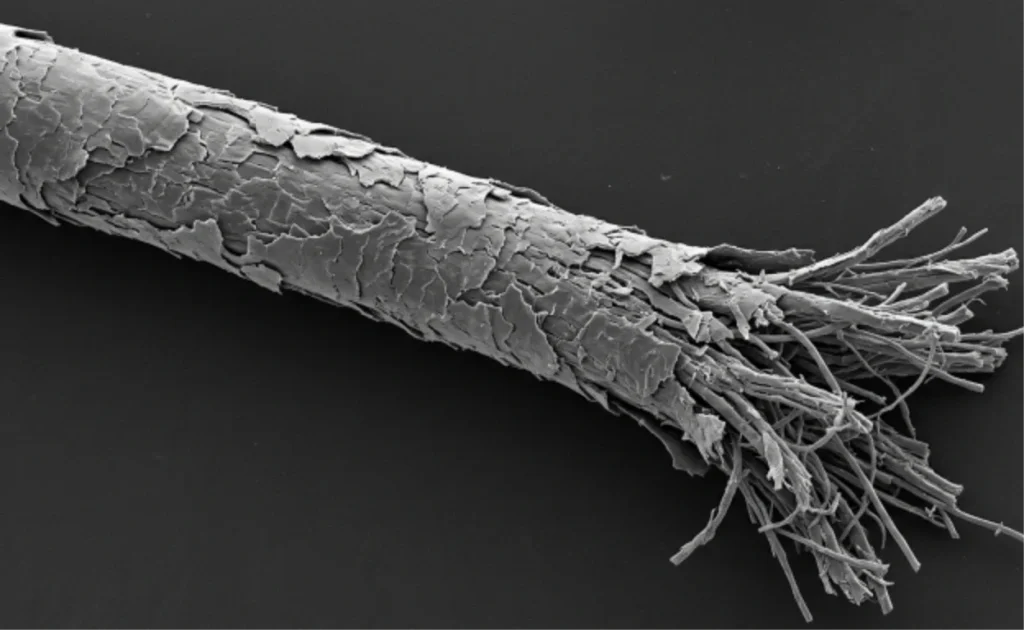
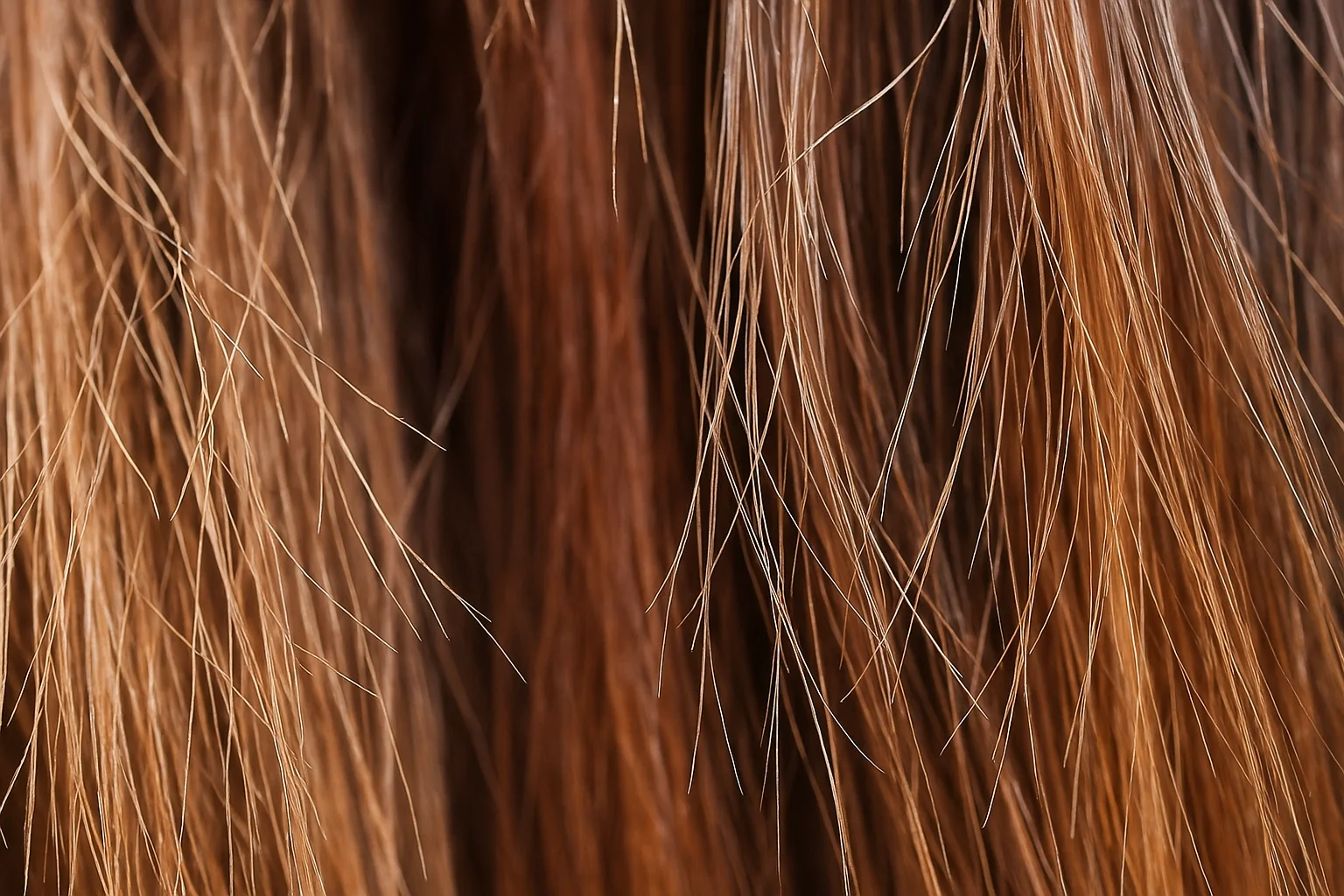
What Do Split Ends Look Like?
Split ends can appear in several ways, including:
- A single hair splitting into two or more strands at the tip
- Frayed or feathered-looking ends
- Rough, dry, or brittle hair tips
- Increased tangling and knotting
- Hair that appears dull or unhealthy
- Thin, wispy ends despite adequate hair density at the scalp
Many patients notice that their hair looks healthy near the roots but becomes increasingly dry, fragile, or uneven toward the ends.
What Causes Split Ends?
Split ends develop when the hair cuticle—the protective outer layer of the hair shaft—becomes damaged over time. Once this protective barrier is compromised, the inner structure of the hair becomes exposed and begins to separate.
Heat Styling
Frequent use of blow dryers, flat irons, curling irons, and hot styling tools can gradually weaken the hair shaft. Excessive heat removes moisture from the hair and damages the protein structure that gives it strength and flexibility.
Chemical Treatments
Hair coloring, bleaching, highlighting, perms, relaxers, and chemical straightening treatments can weaken the structural integrity of the hair. Repeated processing often leaves the ends especially vulnerable because they are the oldest and most weathered part of the hair strand.
Mechanical Damage
Daily wear and tear can add up over time. Aggressive brushing, rough towel drying, tight hairstyles, and friction from clothing, pillowcases, or hair accessories can slowly erode the cuticle and contribute to splitting.
Environmental Exposure
Sunlight, wind, chlorine, saltwater, and hard water can all strip moisture from the hair shaft. Over time, this environmental stress can leave hair dry, brittle, and more susceptible to splitting.
Excessive Hair Length
The longer hair grows, the older the ends become. Since hair ends have often been exposed to years of styling, washing, and environmental damage, they naturally become more vulnerable to splitting if not properly protected.
Why Split Ends Continue to Worsen
One of the biggest misconceptions about split ends is that they remain isolated to the tip of the hair. In reality, once a strand begins to split, the separation can continue moving upward along the hair shaft. As the split travels higher, the strand becomes increasingly weak and eventually breaks.
This is why many people struggle to grow their hair longer. Their follicles may be producing healthy new hair, but the ends are becoming damaged and breaking off before meaningful length can be achieved.
Can Split Ends Be Repaired?
Despite what many products claim, split ends cannot be permanently repaired. Hair is not living tissue, so once the hair shaft has split, it cannot fuse itself back together. Some conditioners, oils, and repair treatments can temporarily smooth the appearance of split ends and make hair look healthier, but they do not permanently reverse the damage.
The most effective way to remove split ends is through trimming. Regular trims help prevent splits from progressing further up the hair shaft and reduce the risk of additional breakage.
How to Prevent Split Ends
Protecting the hair shaft is the best defense against future split ends. Helpful strategies include:
- Limiting heat styling and using heat protectants
- Reducing chemical processing when possible
- Using gentle brushing and detangling techniques
- Avoiding tight hairstyles that create tension
- Maintaining adequate moisture with appropriate conditioners
- Protecting hair from excessive sun and environmental exposure
- Addressing nutritional deficiencies that may affect hair quality and strength
Why Hair Shaft Health Matters
Split ends may seem like a simple cosmetic concern, but they often reflect the overall health of the hair fiber. Healthy, strong hair depends on both a healthy follicle and a well-protected hair shaft. When the hair shaft becomes damaged, even normal hair growth can appear thin, frizzy, or difficult to manage.
A comprehensive hair evaluation can help determine whether split ends are primarily related to styling practices, environmental damage, nutritional deficiencies, underlying scalp conditions, or other factors. By identifying and addressing the root causes, patients can often improve hair quality, reduce breakage, and maintain healthier-looking hair over the long term.